Warning: foreach() argument must be of type array|object, false given in /home/u842594833/domains/namoo.yoga/public_html/wp-content/themes/namootheme/namoo/inc/ytt-blog-shortcodes.php on line 1308
Warning: foreach() argument must be of type array|object, false given in /home/u842594833/domains/namoo.yoga/public_html/wp-content/themes/namootheme/namoo/inc/ytt-blog-shortcodes.php on line 1308
Bali is the world’s most popular destination for yoga teacher training, with more Yoga Alliance-certified schools than anywhere else on earth. This guide covers everything a first-timer needs to know: why Bali beats every other destination, where in Bali to base yourself, how much a quality program actually costs, which certification level to start with, and our independently scored picks for the 7 best schools in 2026. Every school score is calculated from aggregated review data across Google, Facebook, and Tripadvisor. No paid placements. No guesswork. Just the data.
You’ve decided on Bali. That part was easy. But then you open a browser, type “yoga teacher training Bali,” and suddenly you’re staring at thousands of results, different styles, different locations, wildly different prices, and no reliable way to compare any of them. Everyone claims to be the best. Everyone has five-star testimonials on their own website. And you have no idea who to believe.
That’s the problem this guide solves. YTTinBali exists because choosing the wrong school, one that looks great in its Instagram feed but delivers a disorganised, underwhelming experience, is an expensive mistake. We’re talking $2,000–$4,000 and 3–4 weeks of your life. That deserves better than a blog post written by someone who visited one school once.
Our approach is different. We score every school in our directory using an independent scoring system that aggregates real student reviews from Google, Facebook, and Tripadvisor. We look at class size, lead trainer credentials, curriculum depth, Yoga Alliance registration, and dozens of other data points. The scores update automatically. Schools can’t buy their way into a higher position.
What follows is the complete first-timer’s guide to yoga teacher training in Bali: everything you need to know before you book, and the 7 highest-scoring schools to consider for 2026. Let’s start at the beginning.

Why You Should Consider Yoga Teacher Training in Bali
India is the birthplace of yoga. If you’ve practiced for a while, you’ve probably wondered whether India is where you should go to train. The answer, for most first-timers, is no, and understanding why makes it much easier to commit to Bali with genuine confidence rather than as a consolation choice.
Bali is a Hindu island. It shares the same spiritual philosophy, ritual practice, and cultural roots as India. Daily offerings line the streets every morning. Temples punctuate the landscape of every village. The Balinese concept of Tri Hita Karana, harmony between people, nature, and the divine, isn’t a tourist attraction. It’s the actual organising principle of Balinese daily life, and it creates a training environment with real spiritual depth. When you practice yoga philosophy in a classroom surrounded by a culture that lives that philosophy, the teachings land differently. That’s not marketing language. It’s what graduates consistently report.
At the same time, Bali is genuinely comfortable and logistically easy. India can be extraordinary, but it’s also challenging: unpredictable food, unreliable infrastructure, and a cultural intensity that can overwhelm first-time visitors, let alone students trying to study 10 hours a day. Bali offers the spiritual depth without those friction points. The food scene, particularly in Ubud and Canggu, is one of the best in the world for plant-based and yogic eating. Accommodation ranges from basic to genuinely luxurious at prices significantly below equivalent Western standards. Internet is reliable. Healthcare is accessible. Solo female travellers consistently rate Bali as one of the safest destinations in Southeast Asia.
Then there’s the quality of teaching. Because Bali has emerged as a global yoga capital over the past two decades, the best instructors from both India and the West have relocated here. You’re not getting a watered-down version of Indian yoga adapted for tourists. You’re getting traditional lineage taught by teachers who trained in India and bring that depth alongside modern Western teaching methodology. That combination, traditional roots, modern application, is genuinely rare and particularly valuable if you plan to teach in contemporary studio environments after certification.
Finally, the selection. Bali has more Yoga Alliance-registered schools than any other destination in the world. That sounds overwhelming, and it can be, but it’s also what makes a resource like YTTinBali genuinely useful. A competitive market keeps school quality high. Schools that aren’t delivering disappear. The ones on this list have earned their scores by consistently delivering for thousands of students over multiple years.
Where Are the Best Places to Do Yoga Teacher Training in Bali?
Bali is considerably larger than most first-time visitors expect. It’s not a small island you can easily traverse in a day: the traffic, particularly around tourist areas, means that distances take much longer than maps suggest. Where you train will shape your daily experience, your days off, the energy of your cohort, and even which schools are realistically available to you. Choose your location before you choose your school.
Ubud
Spiritual, jungle, rice paddies
Best for: Deep immersion, philosophy-heavy training
Global yoga capital, temples, wellness cafes
Canggu
Surf culture, social, modern
Best for: Balance of training and Bali lifestyle
Beach access, cafe scene, community energy
Uluwatu
Clifftop, ocean, dramatic
Best for: Beach lovers, quieter, focused setting
Sunset shalas, surf breaks, sacred temples
Sanur
Calm, flat, beach town
Best for: Relaxed pace, slightly older crowd
Easy airport access, peaceful lagoon beaches
Amed
Remote, volcanic, dive culture
Best for: Maximum focus, true escape from tourism
Black sand beaches, world-class diving


Ubud is where most first-timers end up, and for good reason. It’s the cultural and spiritual heart of Bali, the place that gave the world the book and film “Eat Pray Love,” and which has been drawing spiritual seekers long before that. The rice terraces, ancient temples, sacred monkey forest, and thriving community of international yogis create an environment where practicing yoga philosophy doesn’t feel like studying for an exam. It feels like an immersion. The concentration of quality schools is also highest here, which gives you the most options when comparing programs side by side.
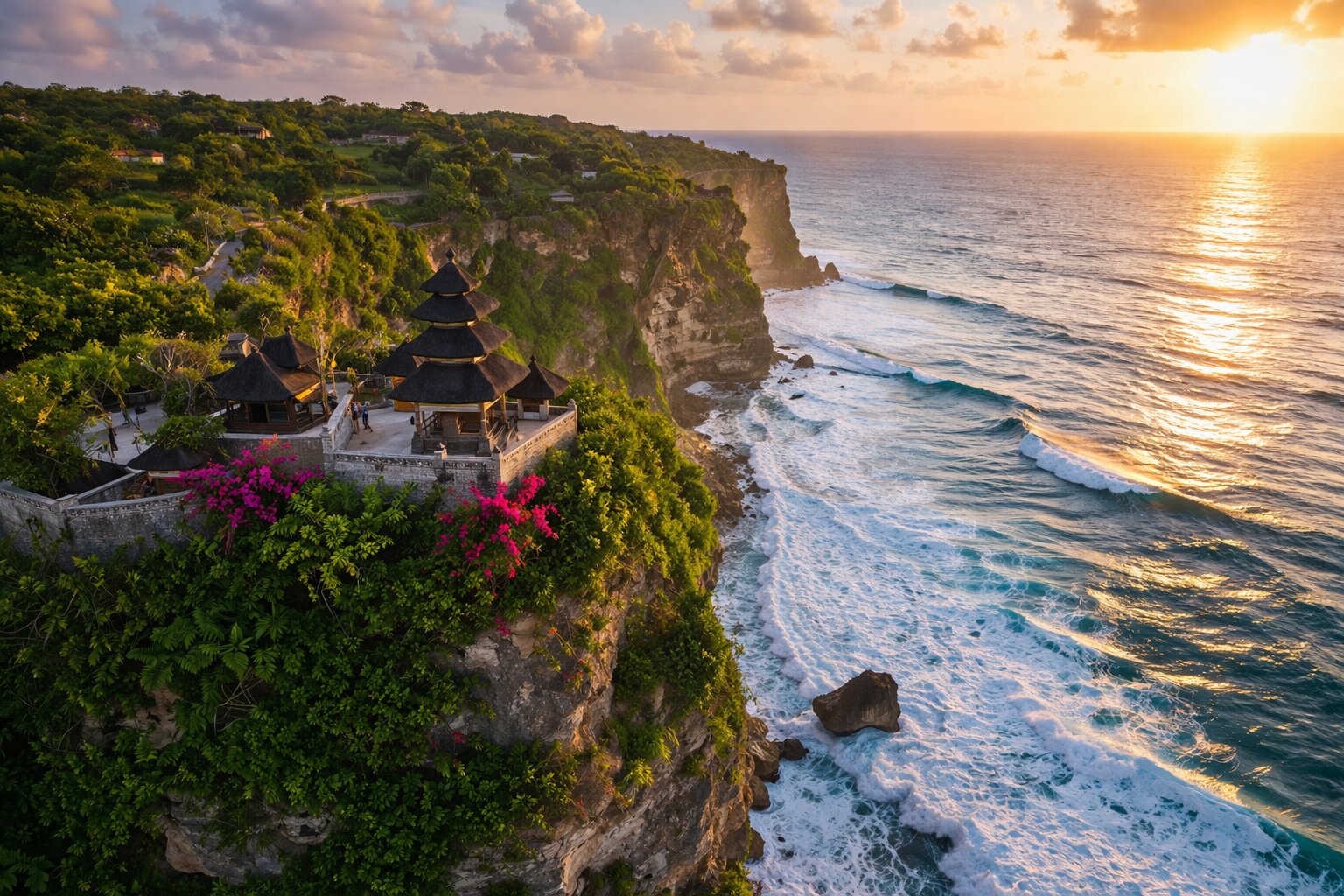
Uluwatu is the best alternative for students who want ocean energy alongside their practice. The clifftop setting is genuinely dramatic: shalas overlooking the Indian Ocean, surf breaks within walking distance, and a slightly more relaxed social scene than Ubud’s wellness-intense atmosphere. The best school in Uluwatu, Alchemy, has earned its reputation not just from its location but from the quality of its curriculum and the holistic lifestyle it integrates into every aspect of training.
Canggu suits students who want to balance serious training with the social side of Bali. There are good schools here, and the cafe scene, beach access, and international community add texture to the weeks off. It’s worth noting though: Canggu has become considerably busier and more expensive over the past few years, which can sometimes work against the deep immersion that makes YTT transformative.
For students interested in the more remote or off-the-beaten-track experience, Amed offers a genuine escape: black sand beaches, almost no mass tourism, and a completely different pace of life. Fewer schools operate here, but the ones that do attract students who prioritise focus and simplicity above all else.
How Much Does Yoga Teacher Training in Bali Cost?
The price range for yoga teacher training in Bali is wider than most people expect when they start researching. You’ll find programs advertising for under $1,000 and others at over $7,000. Both numbers exist for real reasons, and understanding what drives the price, and what’s actually worth paying for, will save you from both overspending and making a costly mistake at the budget end.
| Program | Typical Price Range (USD) | Duration | Yoga Alliance Credential |
|---|---|---|---|
| 100-Hour YTT | $900 – $1,800 | 10–14 days | Not independently registerable |
| 200-Hour YTT | $1,700 – $4,000 | 21–28 days | RYT-200 (global standard) |
| 300-Hour YTT | $2,500 – $5,000 | 28–35 days | RYT-500 (combined with 200hr) |
| 500-Hour YTT | $4,000 – $7,000+ | 45–60 days | RYT-500 |
Programs below $1,700 are worth scrutinising carefully. They’re not automatically bad, but low prices usually mean one of several things: lower-quality accommodation, larger class sizes, less experienced instructors, or a curriculum that cuts corners on depth. Cheap yoga teacher trainings in particular often manage their economics by overfilling cohorts. You pay less, but you get proportionally less individual attention. Given that teaching is a skill that develops through feedback, this is a meaningful trade-off.
Programs above $4,000 at the 200-hour level typically offer private accommodation, smaller group sizes (sometimes 6–10 students), more senior lead trainers, and a luxury setting. If any of those things matter significantly to you, the premium is worth examining seriously. But for most first-timers, the $2,500–$3,500 residential band hits the right balance of quality and value.
Beyond the program price itself, budget for the following additional costs before you arrive in Bali.
- Tuition and all course materials and textbooks
- On-site accommodation for the duration of training
- Daily meals, typically breakfast and lunch, vegetarian or vegan
- Yoga Alliance certification fee in most cases
- Cultural excursions, temple visits, water purification ceremonies
What It Usually Does NOT Include
- International flights to Ngurah Rai International Airport, Bali
- $10 Bali Tourism Levy, pay via the Love Bali portal before arrival
- $35 e-VOA visa, apply online at molina.imigrasi.go.id before your flight
- Airport transfers to and from the school
- Personal spending, excursions, and activities on rest days
One more thing worth knowing: early bird pricing is real and the savings are substantial. Most well-run schools offer 15–40% discounts for students who book and deposit 3 or more months before the start date. If you already know which program you want, booking early is the single most effective way to reduce the total cost of your training.
Different Programs for Yoga Certification in Bali
Yoga Alliance sets the global framework that most reputable teacher training programs in Bali are built around. Understanding the credential structure before you choose your program saves you from starting at the wrong level, or from paying for a certification that doesn’t open the doors you expect it to.
The 200-Hour YTT is the foundation and the starting point for the vast majority of first-timers. It’s the minimum level of training that Yoga Alliance recognises for its RYT-200 (Registered Yoga Teacher) credential, and it’s the benchmark that most professional yoga studios worldwide use when hiring teachers. The 200-hour curriculum, which must cover asana and physical practice, anatomy and physiology, pranayama and meditation, yoga philosophy and ethics, and teaching methodology, takes between 21 and 28 days as a residential intensive in Bali. Upon completion and Yoga Alliance registration ($115 for the first year), you’re eligible to teach professionally anywhere in the world. This is where we recommend almost every first-timer begins.
The 300-Hour YTT is advanced training designed for students who already hold a 200-hour certificate and want to deepen their expertise. Completing a 300-hour program on top of your 200-hour earns the RYT-500 credential, which qualifies you to lead teacher training programs yourself, work with more advanced student populations, and access specialist markets: prenatal yoga, therapeutic yoga, and senior yoga instructors all typically operate at this level. In Bali, 300-hour programs run for approximately 28–35 days and tend to go significantly deeper into yoga philosophy, advanced sequencing, and the business of teaching yoga professionally.
The 100-Hour YTT is worth considering if you’re genuinely unsure about the full commitment of a 200-hour program, or if your schedule only allows two weeks in Bali. A 100-hour program is not independently registerable with Yoga Alliance as a standalone credential, but it does count toward your full 200-hour total if you return to complete the remaining hours at a registered school later. Many students use it as a taster: a way to experience residential teacher training without the full financial and time commitment of the 200-hour program.
The 500-Hour YTT combines 200-hour and 300-hour content in a single extended program, typically running 45–60 days. It’s less common in Bali than the individual programs but suits students who want to achieve RYT-500 status in a single immersive period rather than returning for a separate 300-hour program later. If your schedule and budget allow, completing 500 hours in a single Bali immersion is a genuinely powerful way to launch a teaching career.
Different Types of Yoga Training Package
Program level (100hr, 200hr, 300hr) tells you what you’ll learn and what credential you’ll earn. Delivery format tells you how the learning is structured and where it happens. These are different decisions, and many first-timers only realise this after they’ve already started comparing programs. Understanding the four main delivery formats before you start browsing will make your research significantly more productive.
Onsite — Residential
You live at the school for the full duration of training. Accommodation, meals, and daily practice all happen within the same physical community. This is the most immersive format and the most popular choice for first-timers in Bali by a significant margin. The logic is straightforward: when you’re not commuting, not cooking, not making daily decisions about where to eat and sleep, your full cognitive and emotional bandwidth goes toward the training itself. The community bond that forms in residential programs, eating together, practicing together, sitting through difficult philosophy lectures together, is frequently cited by graduates as one of the most meaningful aspects of the entire experience. Many students arrive as strangers and leave with friendships that last years.
Best for: First-timers who want maximum immersion, structure, and community.
Onsite — Non-Residential
You attend daily training at the school but arrange your own accommodation nearby. This format is less expensive than the residential option since you’re not paying the school for your room and board, and it gives you more privacy and independence in the evenings. The trade-off is that you lose the deep community immersion that comes from living alongside your cohort. You also take on more logistical responsibility: finding a place to stay, managing your own meals on the days training doesn’t cover them, and commuting to and from the school each day. For students who are already based in Bali or who strongly prefer their own space, this format works well. For most first-timers flying in specifically for training, the residential format is worth the premium.
Best for: Students already based in Bali, or those on a tighter budget who prefer private space.
Hybrid YTT
A hybrid program splits the curriculum between online pre-work or post-work and an in-person Bali intensive. Typically, theory-heavy components (yoga philosophy, anatomy, meditation techniques) are delivered via online modules you complete before arriving in Bali. The in-person intensive then focuses on the applied, experiential components: asana practice and refinement, hands-on adjustments, teaching practicum, and the real-time feedback that can only happen in person. The total in-person time in Bali is usually shorter than a fully onsite program, sometimes as little as 10–14 days, making it significantly more compatible with work and family commitments. The quality of hybrid programs has improved considerably in recent years as schools have invested in their online learning platforms.
Best for: Working professionals with limited consecutive leave who still want the Bali experience.
Online YTT
A fully remote program delivered via recorded video lessons, live-streamed sessions, or a combination of both. The most affordable and flexible format, and genuinely appropriate for students with significant constraints on time or budget. The limitations are real though: the embodied learning that makes residential Bali programs transformative, practicing asana in an open-air shala with a skilled teacher watching and adjusting you in real time, simply cannot be replicated on a screen. Online programs also require significant self-discipline to complete, and the community element, which many graduates describe as life-changing, is largely absent. Some schools offer lifetime access to recorded content for graduates, which is valuable as a reference resource even for students who completed an in-person program.
Best for: Very tight budgets, or students genuinely unable to travel for personal or professional reasons.
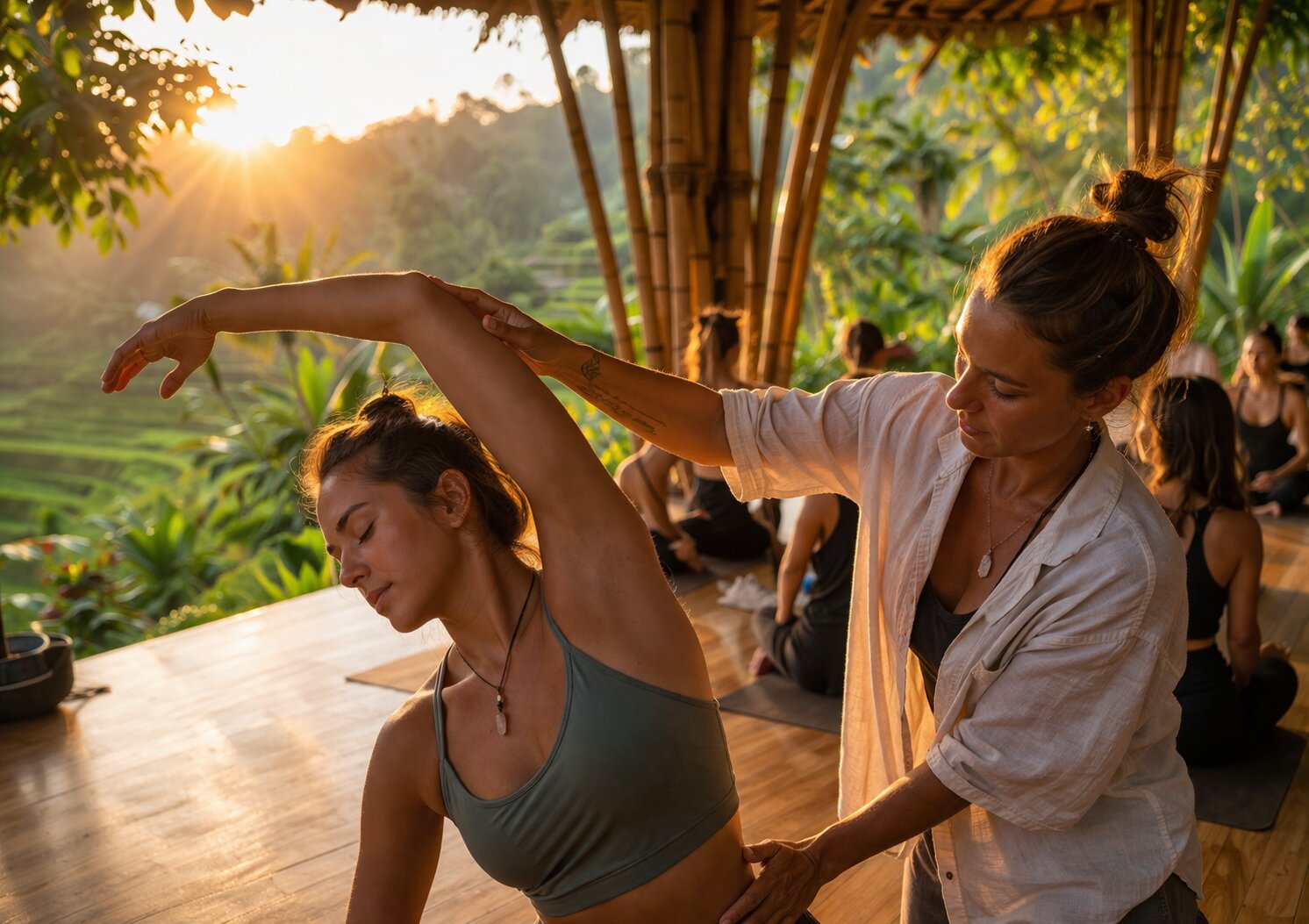
Our recommendation for first-timers is unambiguous: the residential onsite format. The combination of structured daily routine, community living, professional instruction, and Bali’s remarkable physical and spiritual environment creates an immersive container that accelerates learning in ways that are difficult to quantify but impossible to miss when you speak to graduates. If you can get to Bali and commit to three to four weeks, this is the format that will deliver the most complete and lasting transformation.
How to Choose the Best Course for You
The hardest part of researching yoga teacher training in Bali isn’t finding options, it’s evaluating them meaningfully. Every school has a beautiful website. Every school has inspiring testimonials. The checklist below cuts through the surface and focuses on the six factors that actually determine whether a program will deliver what it promises.
- Yoga Alliance registration: verify it directly. If you want the RYT credential that allows you to teach professionally anywhere in the world, your school must be registered with Yoga Alliance as an RYS (Registered Yoga School). Don’t take the school’s word for it. Go to yogaalliance.org, use their school search function, and verify the registration yourself. This takes two minutes and is the single most important box to tick. A school that claims Yoga Alliance certification but doesn’t appear in the directory is a serious red flag.
- Lead trainer credentials: look them up. Yoga Alliance’s own standards require that lead trainers for 200-hour programs hold the E-RYT 500 credential, meaning they have both 500+ hours of teacher training and a minimum of 2,000 hours of verified teaching experience. Ask the school who your lead trainer will be by name. Then search that name on the Yoga Alliance directory to verify their credential. This is a step almost no student takes, and it would save a significant number of people from disappointing experiences.
- Class size shapes everything. The difference between a class of 12 and a class of 35 is not just a number. It’s the difference between getting genuine individual feedback on your teaching practice and being largely invisible. When a teacher is responsible for 35 students simultaneously, the feedback necessarily becomes more general, less specific, and less useful for your development as a teacher. Look for programs that cap enrolment at 20 or fewer students. The schools on this list all specify their maximum batch sizes in their profiles on YTTinBali.
- Curriculum coverage: request the detailed breakdown. Every Yoga Alliance-compliant 200-hour program must cover five core categories: techniques, training and practice (asana, pranayama, meditation); teaching methodology (how to instruct, sequence, and manage a class); anatomy and physiology (how the body moves and what can go wrong); yoga philosophy and ethics (classical texts, the eight limbs, the yogic lifestyle); and practicum (actual supervised teaching). Ask for a week-by-week or day-by-day schedule before you commit. Vague syllabi that list topics without time allocations are a warning sign that the curriculum hasn’t been thought through carefully.
- Contact the school before you book, and time the response. Send a genuine question by email. Note how long it takes to receive a reply. Note whether the reply actually answers your question or sends you to a generic FAQ page. The quality and speed of that response is a direct preview of what your experience as a student will be. Schools that are well-run, genuinely interested in their students, and properly staffed typically respond within 24–48 hours with specific, helpful answers. Schools that take a week to reply, or send templated non-answers, are showing you exactly who they are before you’ve paid anything.
- Verified third-party reviews: read enough to see the pattern. A school’s own website will never show you its worst reviews. Google, Facebook, and Tripadvisor will. The goal isn’t to find a school with no negative reviews; every program has some students who didn’t connect with it. The goal is to read enough reviews to understand the consistent pattern. What do students love consistently? What do they criticise consistently? Is the criticism about fixable logistics, or does it point to something fundamental about the teaching quality? At YTTinBali, we aggregate all three platforms so you can see total review counts and ratings at a glance. Use our scoring methodology to understand what the numbers actually mean.
How to Find Real Reviews for Yoga Schools in Bali
Knowing where to look for reviews is one thing. Knowing how to read them intelligently is another. This section breaks down both, because the ability to evaluate reviews critically is one of the most useful skills you can develop before committing to any significant purchase, and a yoga teacher training program is a very significant purchase.
Google Maps, Facebook, and Tripadvisor all require accounts to post reviews, which creates a basic barrier against anonymous spam. None of them is perfect, coordinated review campaigns exist on all three, but the volume of reviews on well-established schools makes it much harder to manipulate the overall rating significantly. For schools with 500+ reviews on Google, the aggregate rating is a genuinely meaningful data point. For schools with fewer than 50 reviews anywhere, be more cautious and do more direct outreach.
Yoga Alliance’s own school directory also carries student ratings, which are worth checking. Because ratings are tied to verified completions of Yoga Alliance-registered programs, they carry a level of authenticity that anonymous review platforms can’t match. The volume on Yoga Alliance is typically lower than Google, but the signal quality is high.
How to read reviews with intelligence: The most useful reviews are specific and balanced. They name individual teachers, describe what a typical training day looked like, mention how the school handled problems or challenges, and acknowledge both strengths and weaknesses. Read those reviews carefully. The least useful reviews are pure enthusiasm with no detail (“life-changing, best decision I ever made, highly recommend”) or pure rage with no context. Both extremes tell you very little about what the school actually delivers for a typical student.
Pay particular attention to reviews that mention: the responsiveness of the school to concerns raised during training, the quality of individual feedback during teaching practicum, whether the curriculum matched what was advertised, and the condition of the accommodation and food. These practical details give you the most accurate preview of your own likely experience.
A school where every single review is five stars with no critical feedback whatsoever should prompt scepticism rather than confidence. No program is perfect for every student. A pattern of reviews all posted within the same two-to-three week window often signals a school campaign to push ratings rather than organic feedback from students over time. If a school has a Google Maps listing with fewer than 30 reviews despite claiming to have operated for several years, ask yourself why the digital footprint is so thin. And if a school has received specific, detailed negative reviews about the lead trainer’s teaching quality or about curriculum being significantly different from what was advertised, weight those heavily: they’re the reviews that took effort to write and are likely to reflect a genuine experience.
At YTTinBali, we do this aggregation work for you. Every school profile in our directory shows verified review counts from Google, Facebook, and Tripadvisor alongside our independently calculated trust score. You can see the full picture at a glance and click through to read reviews on the original platforms directly from each school’s profile page.
The Best Yoga Teacher Training Schools in Bali for 2026
The seven schools below are the highest-scoring programs on YTTinBali for 2026. Rankings are determined by our independently calculated trust score, which aggregates review data from Google, Facebook, and Tripadvisor alongside a weighted assessment of Yoga Alliance registration, lead trainer credentials, and curriculum depth. No school pays to appear on this list. Scores update automatically.
Use our comparison tool to place any two schools side by side, or browse the full directory to explore beyond this list.
The Yoga Barn — Ubud

Disclaimer: This score is calculated based on publicly available third-party review data and is provided for informational purposes only. It does not constitute an endorsement or guarantee of quality.
Reviews
Rating aggregated from publicly available third-party review data. YTTinBali does not host user reviews directly.
Upcoming Intakes
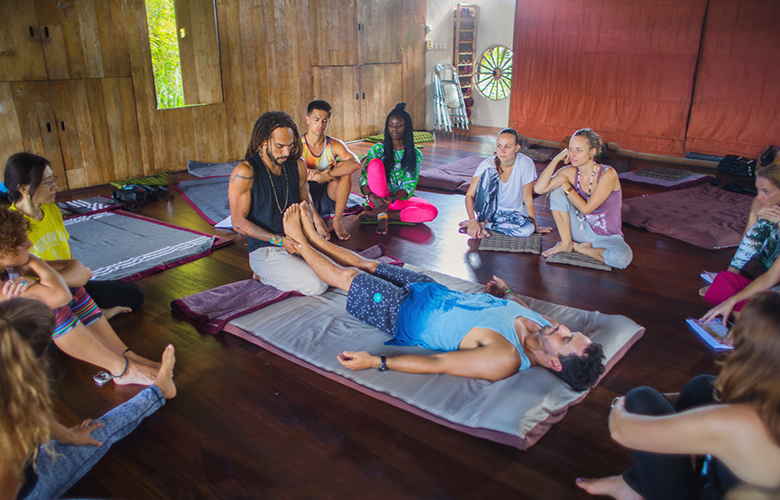
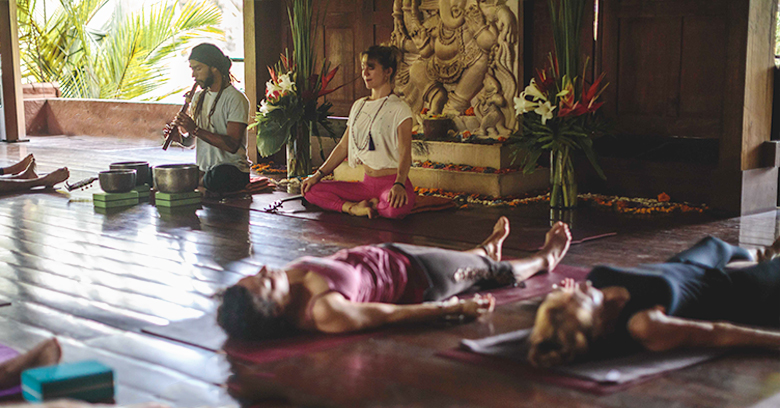
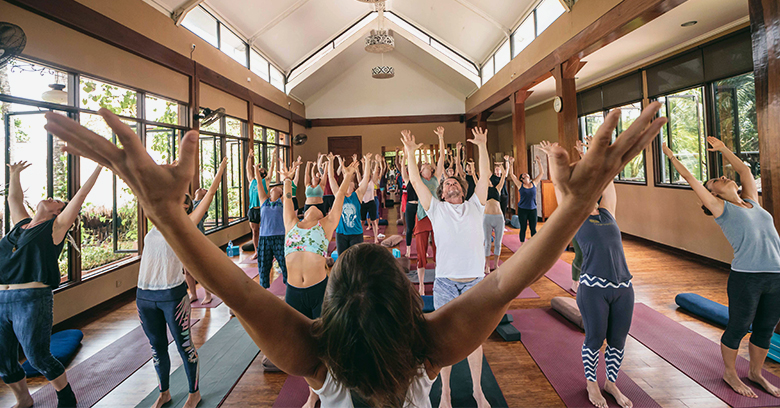
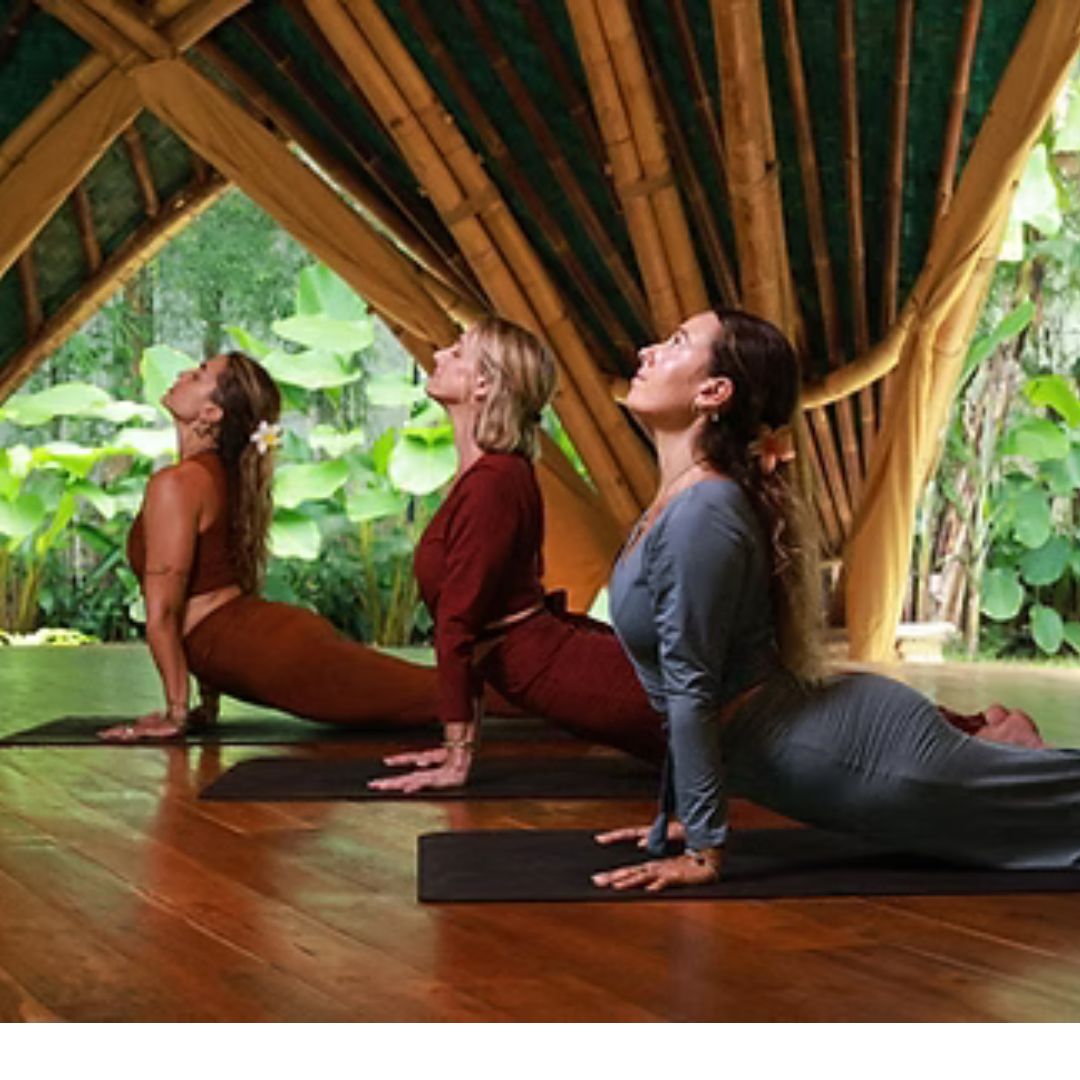
The Yoga Barn is the most recognised yoga institution in Bali, and arguably one of the most recognised in the world. Established in 2007 in the heart of Ubud, it has grown over nearly two decades into a full wellness campus spanning multiple open-air shalas, a healing centre, an organic cafe, a community garden, and a daily schedule of more than 15 different classes available to students and walk-in visitors alike. The scale creates an energy that’s difficult to replicate anywhere else: on any given day, you’re surrounded by hundreds of people from dozens of countries who all chose to be here specifically for yoga, healing, and personal growth. That shared intention is palpable, and it feeds the training in ways that are hard to quantify but immediately felt.
Their teacher training programs span 100-hour, 200-hour, and 300-hour formats, delivered across Hatha, Vinyasa, and Yin styles with a curriculum that has been refined over many years of iteration. The teaching team is experienced and Yoga Alliance-certified, and the emphasis on teaching methodology, specifically on helping students develop their own authentic voice rather than copying a template, is consistently praised in independent reviews. Class sizes are kept at 15 students, which is impressively intimate given the school’s overall scale. You’re not getting a mass-produced experience packaged in a high-profile brand. The teaching is genuine and the feedback is specific.
The Yoga Barn’s position on Jalan Hanoman in central Ubud means you have the best of the town within easy walking distance: the best raw vegan cafes, the sacred monkey forest, the art market, and the evening Kecak dance performances at Pura Dalem Ubud. For students who want to immerse in Ubud’s culture on rest days and evenings, this location is a genuine advantage over more remote schools.
With over 8,000 aggregated reviews across Google, Facebook, and Tripadvisor and a consistently Excellent score, The Yoga Barn has earned its reputation through sustained delivery rather than clever marketing. It’s the right choice if you want world-class teaching, the vibrancy of Ubud’s yoga community, and the confidence that comes from choosing one of the most established and rigorously reviewed names in Bali yoga training.
Alchemy Yoga & Meditation Center — Uluwatu
Disclaimer: This score is calculated based on publicly available third-party review data and is provided for informational purposes only. It does not constitute an endorsement or guarantee of quality.
Reviews
Rating aggregated from publicly available third-party review data. YTTinBali does not host user reviews directly.
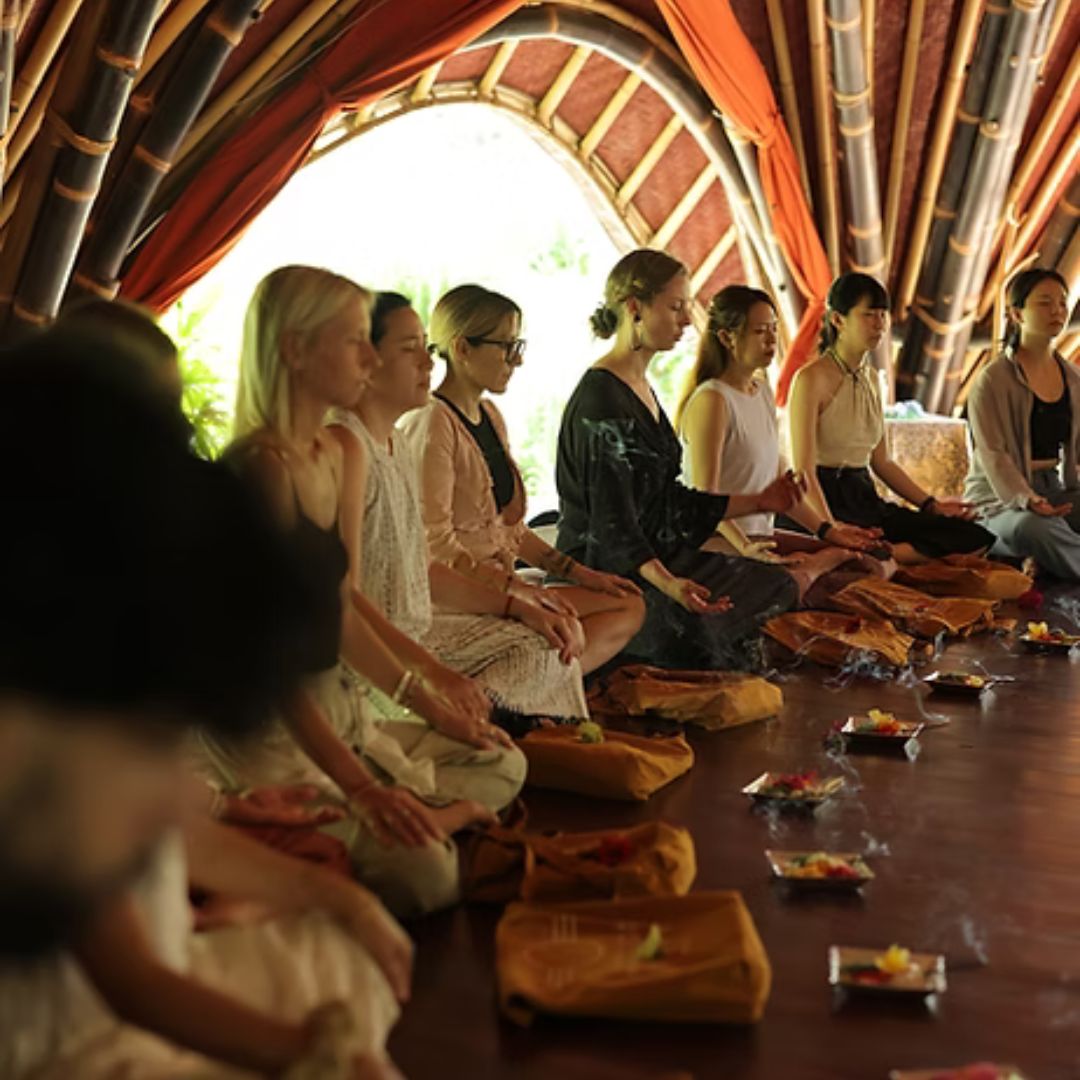
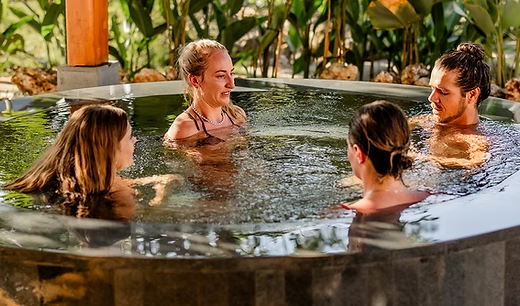
Alchemy sits on Uluwatu’s dramatic limestone clifftop peninsula on Bali’s southern coast, and the setting alone places it in a different category from most schools on this list. The primary open-air shala overlooks the Indian Ocean, and training here means practicing sun salutations with the sound of waves rising from below and the horizon stretching to meet you. That kind of backdrop isn’t just aesthetically beautiful; it has a measurable effect on the quality of meditation, the depth of breathwork, and the way yoga philosophy actually lands when you’re learning it. The environment is doing pedagogical work alongside the teachers.
Beyond the location, Alchemy has built its identity around a genuinely holistic approach to training. The curriculum weaves Hatha and Vinyasa asana practice together with meditation, pranayama, and yoga philosophy in a way that feels genuinely integrated rather than delivering them as separate modules that don’t speak to each other. Students work with the physical body through the morning asana sessions, then move into breathwork and meditation that directly build on what was practiced in the shala, then into philosophy sessions in the afternoon that contextualise the morning’s physical experience within the broader framework of yogic thought. This integration accelerates learning and helps graduates teach in a more connected, less fragmented way.
Alchemy’s raw food cafe is renowned in its own right across Bali’s wellness community; it operates as a destination restaurant for visitors who have never set foot in a yoga class. The nutritional philosophy embedded in the food program extends directly into the teacher training curriculum: students learn not just how to sequence a class but how to support students in building a lifestyle that sustains and deepens their practice. Many graduates describe the food at Alchemy as one of the most transformative parts of their time here, which says something meaningful about the level of intentionality that goes into every aspect of the program design.
This is the school for students who want a complete lifestyle reset in a world-class setting, not just a certificate to hang on the wall. The combination of breathtaking environment, holistic curriculum, and exceptional food quality makes Alchemy one of the most complete training experiences available in Bali.
Radiantly Alive — Ubud
Disclaimer: This score is calculated based on publicly available third-party review data and is provided for informational purposes only. It does not constitute an endorsement or guarantee of quality.
Reviews
Rating aggregated from publicly available third-party review data. YTTinBali does not host user reviews directly.
Upcoming Intakes
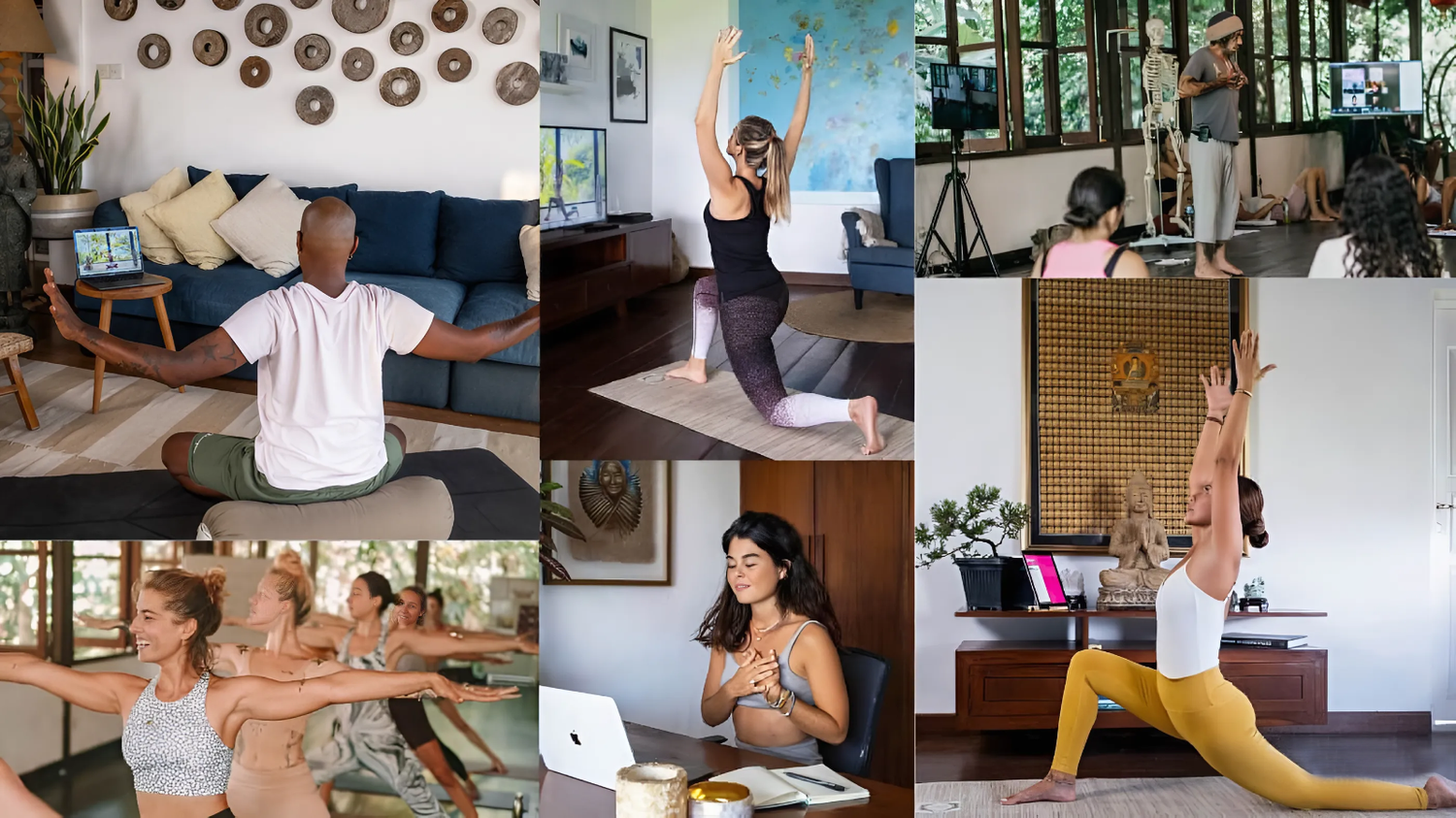
Radiantly Alive has carved out a distinct identity in Ubud’s crowded yoga training market by doing something most schools don’t: bringing in world-class visiting teachers from across the global yoga community as core contributors to their teacher training curriculum. Rather than delivering a program shaped entirely by one or two in-house lead trainers, Radiantly Alive builds its training around a rotating faculty of highly regarded international teachers. The result is that your cohort benefits from multiple high-calibre perspectives on the same material: different teaching styles, different philosophical emphases, different approaches to alignment and sequencing, which produces graduates who are genuinely more versatile and adaptable than those trained in a single-style environment.
The social atmosphere at Radiantly Alive is one of its most consistently cited strengths in independent reviews, and it’s worth understanding why. The school actively cultivates a community culture rather than treating the social element of training as an incidental byproduct. The cohort structure, the shared meals, the design of the common spaces, and the after-class gatherings all reflect a deliberate philosophy about how people learn best from each other as well as from teachers. Students who come to Bali solo, which is the majority, consistently report leaving with a genuine global yoga community that continues to function well beyond the weeks of training itself.
The curriculum covers Hatha and Vinyasa as core disciplines, with strong emphasis on alignment principles, creative class sequencing, and, particularly valuable for new teachers, the development of a personal teaching voice. New teachers often struggle in their first months because they’ve learned poses and sequences but haven’t developed the confidence to guide a room of students in a way that feels natural and authoritative. Radiantly Alive specifically addresses this gap through its practicum and feedback structure.
The school’s location in central Ubud puts you within easy reach of everything the town offers on rest days. It’s the right school if you want serious, multi-dimensional training delivered in a community that you’ll still be in contact with five years after graduation.
Blooming Lotus Yoga — Ubud

Disclaimer: This score is calculated based on publicly available third-party review data and is provided for informational purposes only. It does not constitute an endorsement or guarantee of quality.
Reviews
Rating aggregated from publicly available third-party review data. YTTinBali does not host user reviews directly.
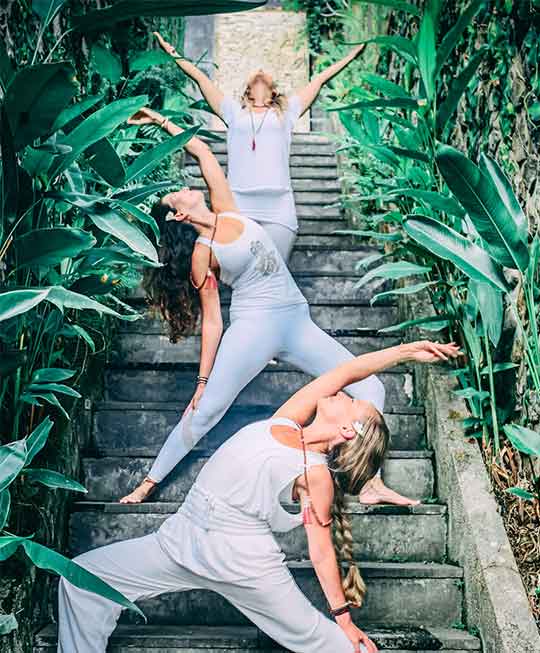
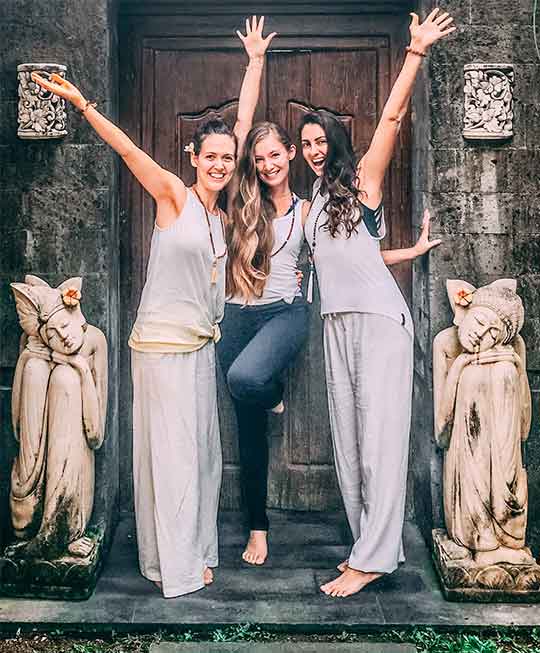
Blooming Lotus Yoga has built its reputation on something increasingly rare in the contemporary yoga teacher training market: a genuine commitment to the philosophical and traditional dimensions of yoga, delivered with the same rigour and depth as the physical curriculum. Where many modern programs dedicate the majority of their time to asana practice and relegate philosophy to a few afternoon lectures, Blooming Lotus places the classical texts at the centre of the training experience. Students work systematically through the Yoga Sutras of Patanjali, the Bhagavad Gita, and the Hatha Yoga Pradipika, not as historical artefacts but as living frameworks for understanding practice, teaching, and daily life.
This philosophical depth has real practical implications for teaching. Students who understand yoga as a complete philosophical system, who can explain the relationship between the eight limbs, who can speak to the historical and cultural context of asana within the broader tradition, are simply more credible, more interesting, and more effective teachers than those who see yoga exclusively through the lens of physical fitness. Blooming Lotus graduates consistently report that this philosophical grounding is the thing that most differentiates their teaching from that of peers who trained at more physically-focused schools.
The physical practice is grounded in Hatha as the foundational form, with Vinyasa and Yin woven in to develop range, adaptability, and the ability to serve students with different needs and bodies. The teaching methodology sessions are particularly strong, with a specific focus on helping students discover and develop their own authentic teaching voice, a process that involves as much personal exploration as it does technical instruction. Graduates consistently describe a genuine shift in how they relate to both their practice and their students that they attribute directly to this aspect of the Blooming Lotus program.
The school keeps its groups deliberately small, which means lead teachers can track every student’s progress with the kind of granular attention that genuinely moves the needle. If you are drawn to the traditional roots of yoga and want a training that takes the philosophy of the practice as seriously as the postures, Blooming Lotus is the most intellectually rigorous choice on this list.
House of Om — Ubud

Disclaimer: This score is calculated based on publicly available third-party review data and is provided for informational purposes only. It does not constitute an endorsement or guarantee of quality.
Reviews
Rating aggregated from publicly available third-party review data. YTTinBali does not host user reviews directly.
Upcoming Intakes
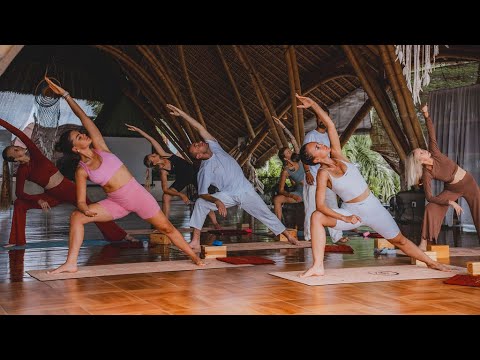
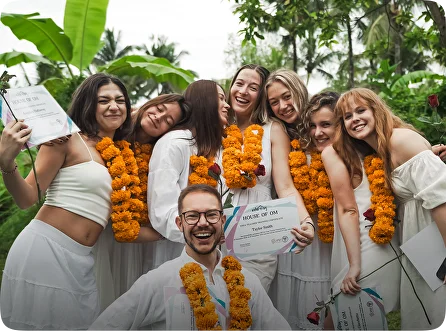
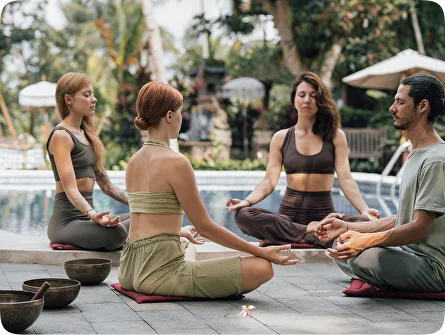
House of Om is set among the waterfalls and jungle of Ubud, and the location gives daily practice a quality that’s genuinely difficult to describe until you’ve experienced it: the sound of running water, the canopy of tropical trees overhead, the feeling of complete removal from the tourist Ubud that exists a few kilometres away. This environmental intentionality reflects the broader philosophy of the school. Everything in the program is designed to support deep learning and genuine transformation, from the physical setting to the curriculum structure to the food.
The multi-style curriculum is House of Om’s central pedagogical strength. Hatha, Vinyasa, and Ashtanga are all taught as core disciplines alongside Yin and daily meditation and pranayama. For a first-time teacher, this breadth is enormously valuable. The yoga market has diversified considerably over the past decade: studios offer hot yoga, yin yoga, flow yoga, restorative yoga, alignment-based yoga, and dozens of specialist variants. A teacher who can only instruct one style is significantly more limited in their employment options than one who can move fluidly across multiple modalities. House of Om graduates leave with that versatility built in from day one.
The 20-day intensive format runs monthly across the full year, with new cohorts beginning every four weeks. That consistency means the curriculum has been refined through repeated delivery, and the teaching team has developed a level of precision and responsiveness that only comes from running the same program dozens of times. The all-vegan meal plan is a standout feature that students mention consistently in independent reviews, not just as a practical benefit but as an integral part of the yogic lifestyle they’re learning to embody and teach. The food is genuinely excellent, which matters when you’re training physically for 9–11 hours a day.
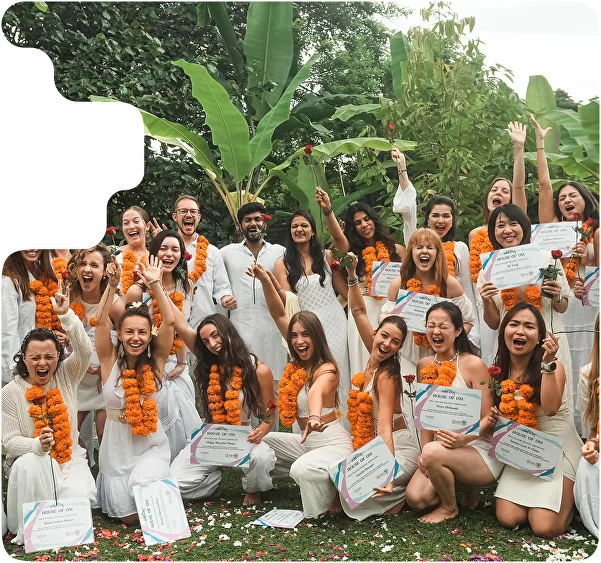
For the price point, House of Om represents one of the strongest value combinations on this list: a multi-style curriculum, a jungle setting, a carefully maintained community culture, and thousands of verified positive reviews. It’s particularly well suited to first-timers who want broad teaching capability without choosing a single-style school before they’re sure which style they want to specialise in.
Ulu Yoga — Uluwatu
Disclaimer: This score is calculated based on publicly available third-party review data and is provided for informational purposes only. It does not constitute an endorsement or guarantee of quality.
Reviews
Rating aggregated from publicly available third-party review data. YTTinBali does not host user reviews directly.
Upcoming Intakes
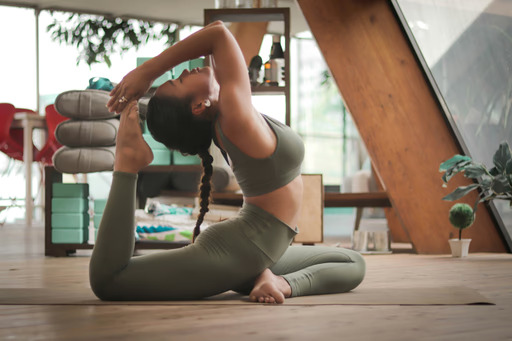
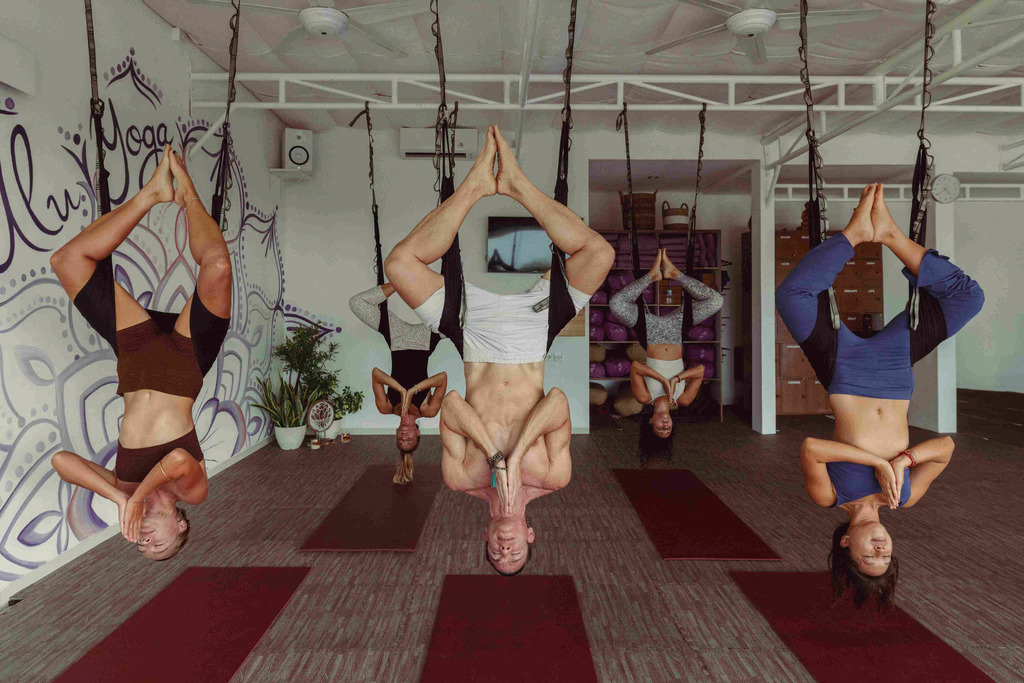
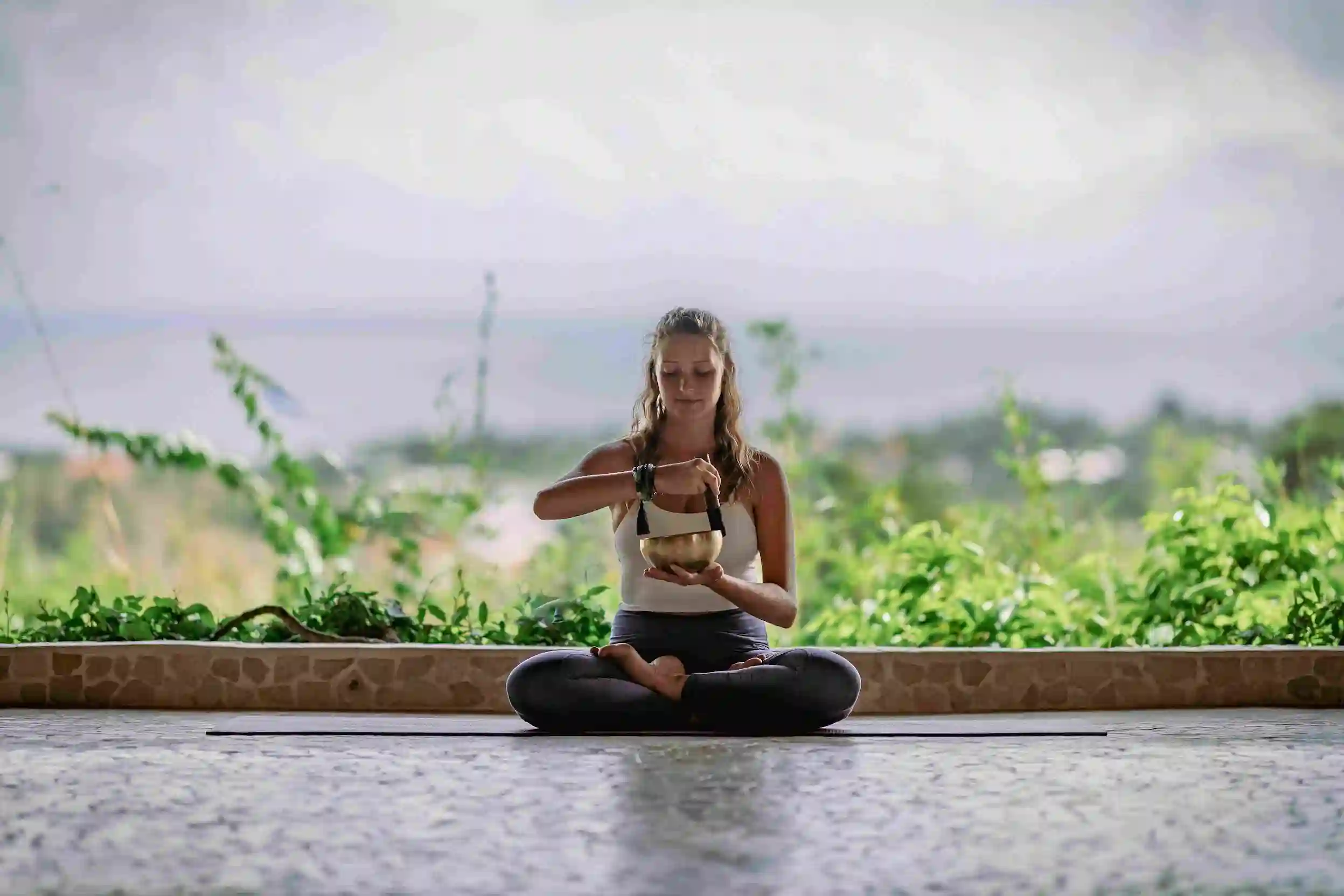
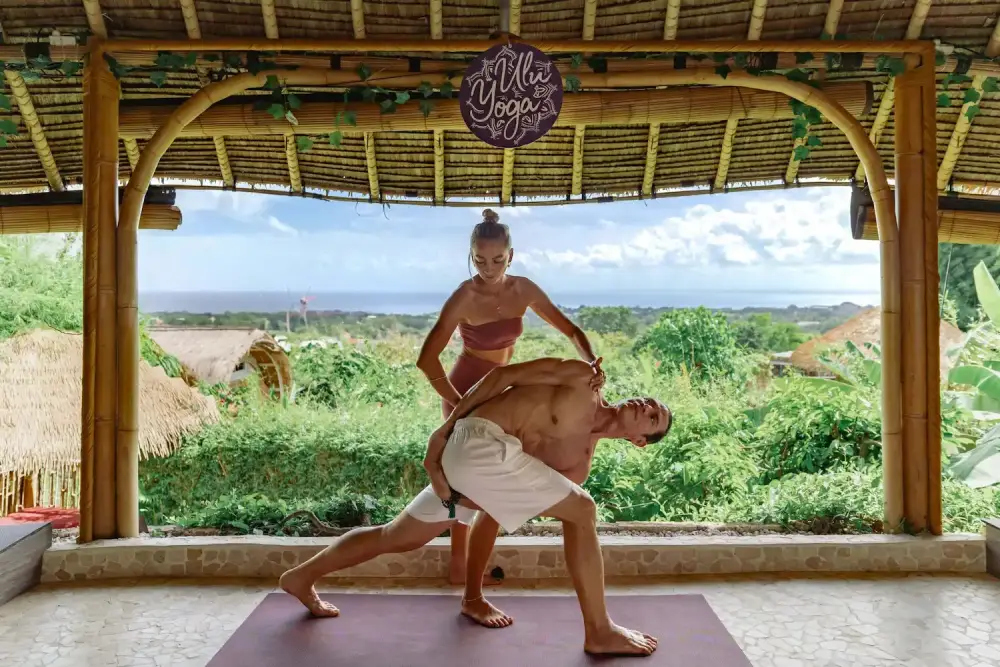
Ulu Yoga occupies a stunning ocean-view shala in Uluwatu, steps from some of Bali’s finest surf breaks and most beautiful beaches. The school has built a distinctive identity in the Bali training market by doing something no other school on this list does: making aerial yoga and acro yoga core components of the 200-hour teacher training curriculum alongside the standard Hatha and Vinyasa foundation. This is not a gimmick. The aerial and acro disciplines require a sophisticated understanding of body mechanics, trust, communication, and physical intelligence that deepens every other aspect of yoga practice and teaching.
The physical foundation of the curriculum is rigorous and well-constructed. Hatha and Vinyasa form the base, with deep work in alignment principles, functional anatomy, and the biomechanics of safe movement. Hands-on adjustments, one of the most skill-intensive and frequently underdeveloped competencies in yoga teacher training, receive dedicated attention throughout the program. Students practice adjusting each other daily under the supervision of experienced teachers, building the tactile sensitivity and confidence that distinguishes a truly skilled teacher from a technically competent one. Yin yoga is also woven into the curriculum, giving graduates the full spectrum from dynamic to restorative modalities.
Ulu Yoga runs small groups of 15–25 students, which maintains the personal attention that makes teacher training genuinely developmental rather than purely instructional. The Uluwatu location is a feature rather than a compromise: the school actively encourages students to surf, explore the nearby beaches and temples, and engage with the specific energy of the peninsula on their rest days. The balance between disciplined training and genuine enjoyment of where you are is built into the program design, and it contributes to the sustainable intensity that allows students to go deep without burning out before certification.
The teaching team has extensive international experience, and the consistency of the school’s review scores over time reflects a stable, high-quality program rather than a school that delivers brilliantly occasionally and inconsistently the rest of the time. If Uluwatu calls to you and you want training that offers something genuinely different from the Ubud standard, Ulu Yoga is the standout choice.
Shades of Yoga — Bali
Disclaimer: This score is calculated based on publicly available third-party review data and is provided for informational purposes only. It does not constitute an endorsement or guarantee of quality.
Reviews
Rating aggregated from publicly available third-party review data. YTTinBali does not host user reviews directly.
Upcoming Intakes
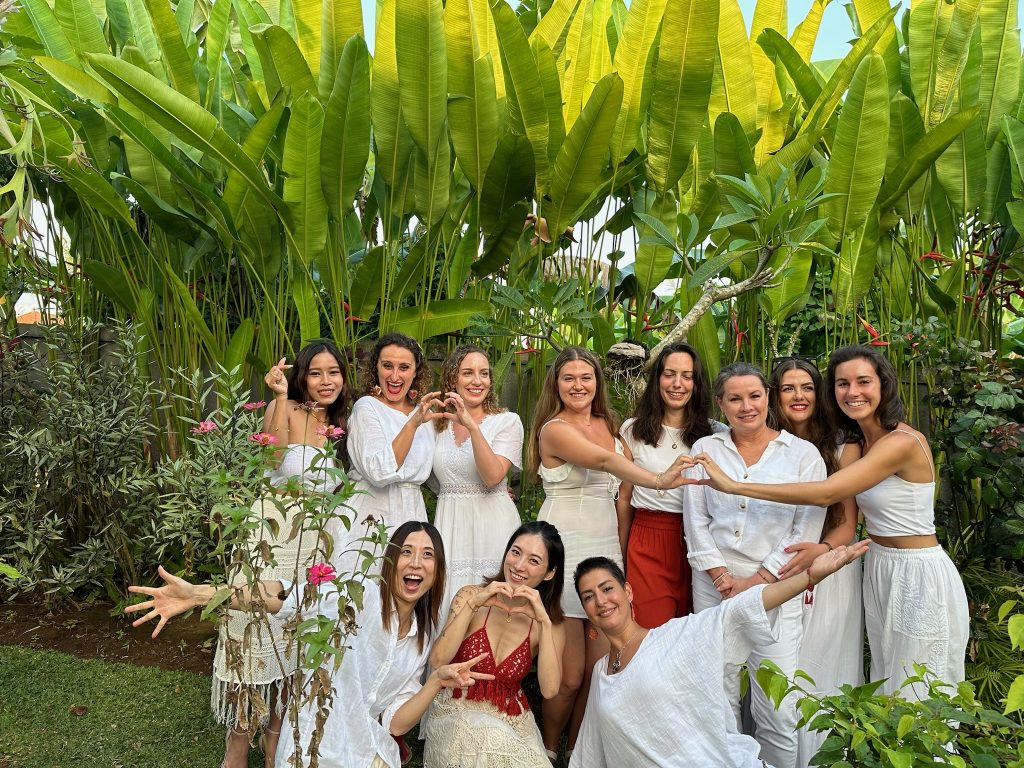
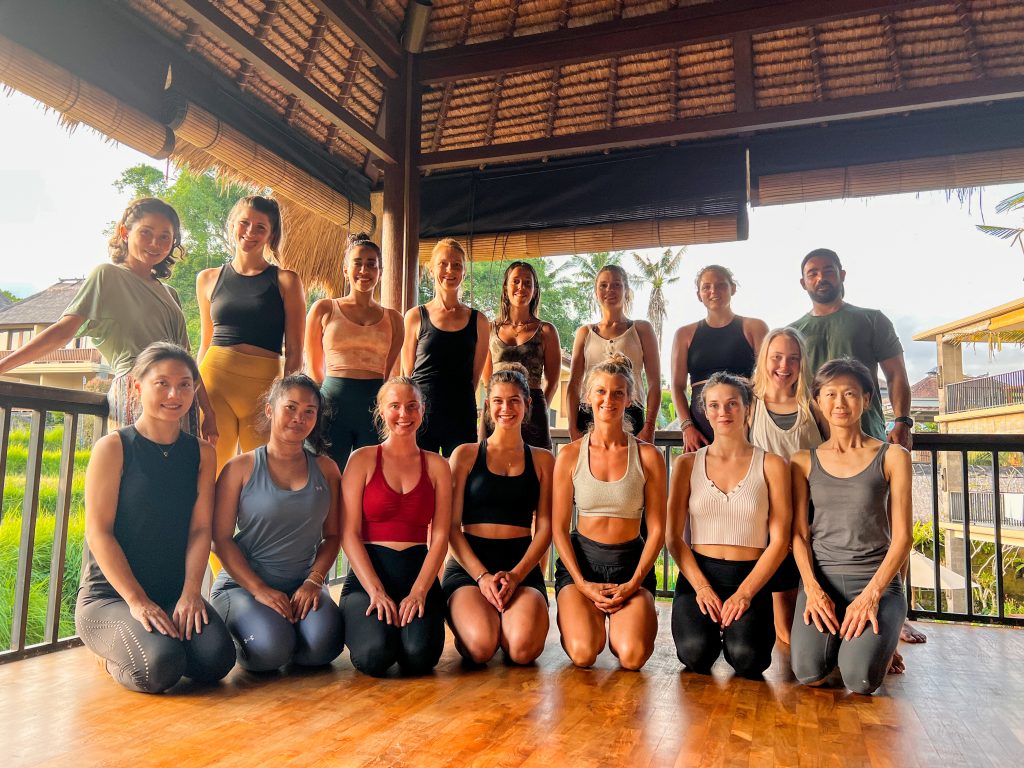
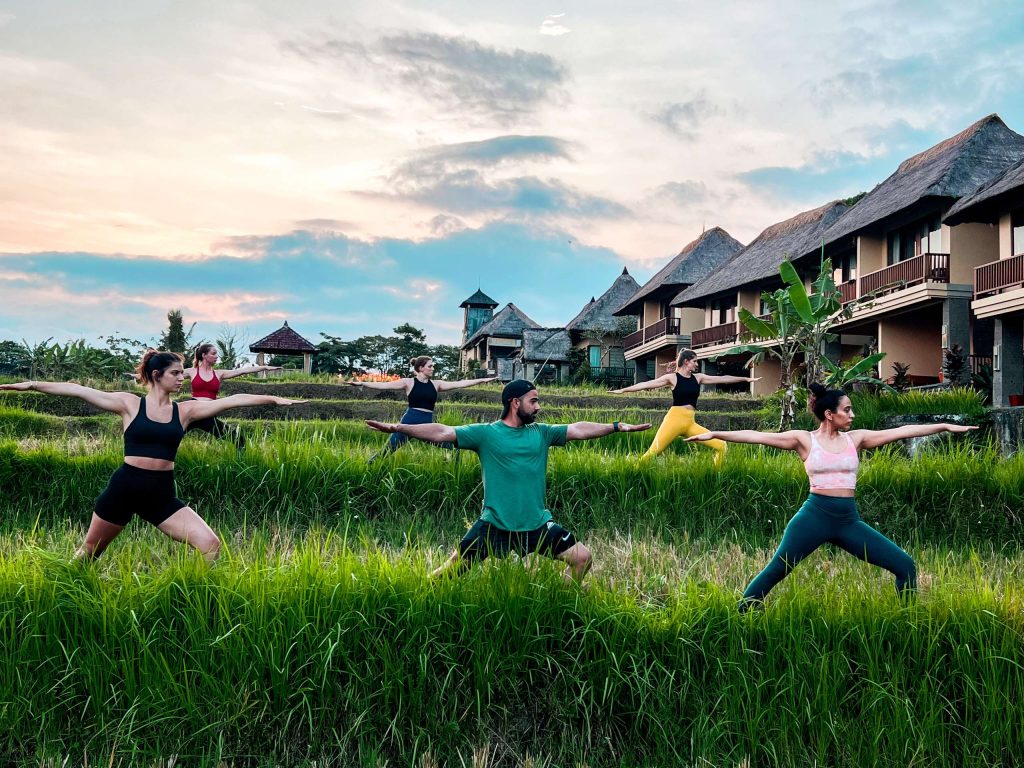
Shades of Yoga has built its entire program philosophy around a principle that’s easier to state than to execute: the best teacher training happens when students feel genuinely seen, genuinely supported, and genuinely challenged in equal measure. Achieving all three simultaneously requires small groups, experienced teachers with genuine mentoring instinct, and a curriculum designed with enough flexibility to respond to where the cohort actually is, rather than mechanically delivering the same content regardless of who’s in the room. Shades of Yoga consistently delivers all three, and the reviews reflect it.
The cohort sizes are deliberately kept significantly smaller than most competitors. This isn’t a commercial strategy; it costs more to run smaller cohorts. It’s a pedagogical one. When a lead teacher is responsible for 10 students rather than 25, the feedback loop changes fundamentally. Every student’s alignment, every teaching practice, every philosophical question gets genuine individual attention. The practicum teaching sessions, where students teach each other under observation and receive written and verbal feedback, become far more meaningful when the teacher can speak specifically to your patterns rather than generically to the group’s aggregate weaknesses.
The curriculum covers Hatha, Vinyasa, and Yin as core physical disciplines, with breathwork, meditation, and yoga philosophy integrated throughout rather than delivered in isolated blocks. Students who have completed their 200-hour training at larger schools and returned to Shades of Yoga for a 300-hour program consistently cite this integration, the way the different dimensions of yoga are woven together rather than compartmentalised, as one of the most significant differentials. Each day of training feels coherent rather than fragmented, which supports both retention and practical application.
The grounding quality that characterises Shades of Yoga’s reviews (the word “grounding” appears so frequently across independent reviews that it cannot be coincidental) reflects something real about the environment the school creates. If you are drawn to a training experience that is contemplative as well as technical, where you have genuine space to process the transformation that a YTT initiates rather than just racing through the curriculum, Shades of Yoga is one of the most consistently excellent choices on this list.
Ready to Choose Your Bali YTT?
Every school on this list is Yoga Alliance-certified and has earned its position through independently verified student reviews across multiple platforms. There is no single right answer: the best school for you depends on which location resonates, which yoga style fits your practice and teaching goals, which class size suits your learning style, and which training environment matches your personality. A student who thrives in the vibrant community atmosphere of Radiantly Alive might find Shades of Yoga too quiet. A student who needs the grounding and focus of a small cohort might find the scale of The Yoga Barn overwhelming. Both schools are excellent. The question is which one is right for you.
The best next step is to browse the full profiles of two or three schools that caught your attention, then use our comparison tool to examine them side by side. You’ll compare trust scores, program details, pricing, class sizes, accommodation types, and upcoming intake dates in a single view: the kind of structured comparison that used to require hours of research across multiple websites.
Frequently Asked Questions
Do I need prior yoga experience to do a 200-hour YTT in Bali?
Most 200-hour programs in Bali are open to students with no prior teaching experience, but almost all recommend at least 6 months of consistent personal practice before enrolling. This recommendation isn’t about flexibility; flexibility is a byproduct of consistent practice, not a prerequisite for learning. It’s about having sufficient body awareness to engage meaningfully with alignment instruction, to understand what your teacher is cueing from the inside rather than just imitating the shape from the outside. Students who arrive with an established personal practice also tend to find the physical demands of training, typically 2–3 hours of asana practice daily, significantly more manageable in the first week, before the body adapts to the intensity.
Is Yoga Alliance certification worth it?
Yes, for anyone who plans to teach professionally, and for many who don’t. Yoga Alliance’s RYT-200 is the most widely recognised yoga teaching credential in the world. Most professional yoga studios require it as a minimum qualification before hiring. Many gyms, wellness centres, and corporate yoga programs require it as well. Beyond employment, the credential signals to potential private clients that you’ve completed a standardised, independently verified curriculum. The first-year Yoga Alliance registration costs $115, which covers both the one-time application fee and the first year of membership. Annual renewal is $65 thereafter. Relative to the total cost of a quality Bali YTT program, this is a trivial investment for a globally recognised professional credential that doesn’t expire.
What is the difference between a 200-hour and 300-hour yoga teacher training?
A 200-hour YTT is the foundational certification; it qualifies you to teach beginner and mixed-level yoga classes and leads to the RYT-200 credential from Yoga Alliance, the global standard for professional yoga teaching. A 300-hour YTT is an advanced program designed for teachers who already hold a 200-hour certificate and want to deepen their expertise, specialise in particular styles or populations, or qualify for the RYT-500 credential. Completing a 300-hour program on top of a 200-hour earns you the RYT-500, which qualifies you to serve as a lead trainer on 200-hour teacher training programs yourself. Most people doing their first Bali training should start with the 200-hour program and consider the 300-hour as a natural progression 12–24 months into their teaching career.
When is the best time to do a yoga teacher training in Bali?
The dry season in Bali runs from April to October, and these months offer the most reliable weather for outdoor practice, excursions, and exploring the island on rest days. Within the dry season, May, June, September, and October represent the sweet spot: pleasant weather without the peak tourist crowds and elevated prices that characterise July and August. The wet season (November to March) brings regular rainfall but also a lushness and quiet to the island that many students find conducive to the introspective quality of teacher training. Rain in Bali is typically concentrated in daily showers rather than persistent grey weather, and most school shalas are covered or semi-covered; training continues regardless. The practical implication: if weather and social energy matter to you, aim for May–June or September–October. If budget is the priority, the wet season offers more affordable program rates and accommodation.
How far in advance should I book a yoga teacher training in Bali?
For the top-rated schools on this list, booking 3–4 months in advance is strongly recommended for two reasons. First, to secure your preferred intake date: popular programs at well-reviewed schools regularly sell out 2–3 months ahead, particularly for dry season intakes from May through September. Second, to qualify for early bird pricing: most schools offer 15–40% discounts for students who pay a deposit 3 or more months before the program start date. A $300–$500 deposit is typically all that’s required to hold your place, and deposits are usually transferable to a different intake date if your plans change. The combination of securing your spot and locking in the early bird price is a compelling reason to book decisively once you’ve identified the right program.